Which Draft Beer System Is Right for Your Bar?
- Sep 1, 2026

Bar owners are typically familiar with the three primary draft system options — direct draw, air-cooled, and glycol — though selecting the right one for a specific space often depends on a few key factors. This guide breaks the decision down into three questions. For a full technical breakdown of how each system works, including keg types, gas selection, and line sizing, see our Draft Beer System Quick Reference Guide.
Three Questions That Determine the Right Setup
1. Keg Placement Relative to the Taps
When kegs are stored directly beneath the bar, a direct draw system is typically the right choice, as it minimizes line length and installation requirements. When kegs are housed in a separate cooler or walk-in, an air-cooled or glycol system becomes necessary to move beer from storage to the tap.
2. Distance Between the Cooler and the Taps
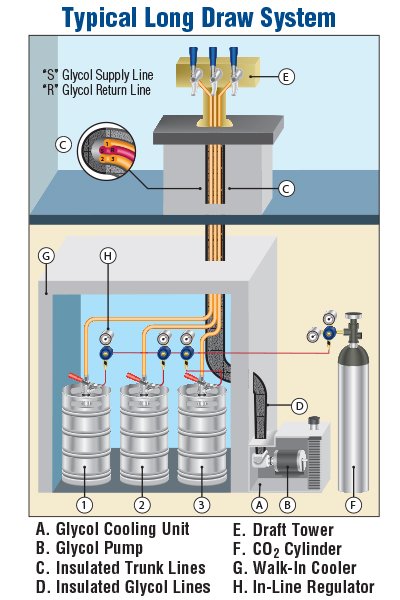
Air-cooled systems perform reliably over runs of up to approximately 25 feet and cost less to install for shorter distances. Beyond that range, glycol systems are the better option, as they maintain consistent temperature control over longer runs and help prevent the foaming issues air-cooled systems often encounter at distance.
3. Tap Count and Pour Volume
A smaller number of taps at moderate volume can typically be managed with a simpler, more economical setup. Bars operating many taps or serving higher volume tend to benefit from glycol's consistency, along with the added durability of copper trunk lines.
Quick-Match Comparison
| Setup | Best For | Distance | Relative Cost |
| Direct Draw | Kegs stored directly beneath the bar | Minimal | $ |
| Air-Cooled | Cooler nearby, moderate volume | Up to ~25 ft | $$ |
| Glycol | Cooler farther away, high volume, many taps | 25+ ft | $$$ |
Additional Factors to Consider
A few other details are worth weighing before making a final decision: current budget, plans to add taps in the future, and how much technical detail is needed before committing to a system. For a closer look at how each system works — kegs, gas types, line sizing, maintenance — the Quick Reference Guide covers all of it.