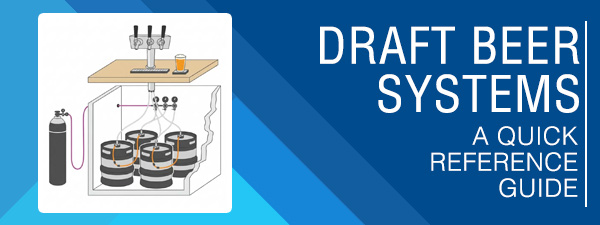
Bar owners are typically familiar with the three primary draft system options — direct draw, air-cooled, and glycol — though selecting the right one for a specific space often depends on a few key factors. This guide breaks the decision down into three questions. For a full technical breakdown of how each system works, including keg types, gas selection, and line sizing, see our Draft Beer System Quick Reference Guide.
Read more
Posted in Tips & Tricks, Beer 101 and Long Draw Beer Dispensing Systems
A great draft system isn't just about pulling a lever and watching beer flow. Behind every smooth pour is a series of carefully selected components working in harmony. Whether you're designing a full bar or adding a single tap line, understanding how each part of the system works helps you serve better beverages, reduce waste, and troubleshoot with confidence.
Read more
Posted in Tips & Tricks, Beer 101 and Long Draw Beer Dispensing Systems
So, you’ve decided it is a good idea to secure your beer. I get it, there are a TON of reasons why this makes sense. Here are the top 4...
Read more
Posted in Product Spotlight, Beer 101, Long Draw Beer Dispensing Systems, Jockey Box Dispensing and Beer Dispenser & Kegerator Components
Keep your bar clean and dry by installing a drip tray underneath your faucets.
Read more
Posted in Product Spotlight, Beer 101 and Long Draw Beer Dispensing Systems
Beer trunkline, sometimes called a python, is the beer conduit in your draft beer dispensing system. It moves your beer from the keg to the faucet, bringing glycol along for the ride to ensure your beer stays cold.
Read more
Posted in Product Spotlight, Beer 101 and Long Draw Beer Dispensing Systems
The simplified explanation of a regulator would describe it as a beer dispensing system component that is used to regulate the amount of gas that passes through your keg and pushes your beer to the faucet.
However, this description doesn't account for all the different kinds of regulators – you see, one size doesn’t fit all. There are primary regulators – further divided into CO2, nitrogen, single, dual, etc. – and secondary regulators.
Each type of regulator plays a unique role in a beer dispensing system, so to help you decide what kind of regulator you’ll need, we've provided more information on each.
Read more
Posted in Product Spotlight, Beer 101, Long Draw Beer Dispensing Systems and Beer Dispenser & Kegerator Components
If there’s one beer component you can really say brings your whole dispensing system together, it’s the keg coupler. It connects the air line from your CO2 or Nitrogen tank and the beer line to your keg. It’s also what allows the compressed air into your keg, resulting in your beer being pushed all the way to the faucet.
Read more
Posted in Product Spotlight, Beer 101, Long Draw Beer Dispensing Systems, Jockey Box Dispensing and Beer Dispenser & Kegerator Components
Choosing the correct beer faucet for your beverage dispensing system is crucial - as the last component your beer touches before it reaches the glass, faucets can make or break the perfect pour.
Read more
Posted in Product Spotlight, Beer 101, Long Draw Beer Dispensing Systems and Beer Dispenser & Kegerator Components
If your beer system has been shut down due to COVID-19, it’s important to complete certain cleaning and operational procedures before serving any beer to customers.
Read more
Posted in How To, Beer 101, Long Draw Beer Dispensing Systems and Cleaning Beer Components
The 8-step process makes changing your cylinder as simple as possible. Includes instructions on increasing your CO2 Regulator's pressure.
Read more
Posted in How To, Beer 101, Long Draw Beer Dispensing Systems, Jockey Box Dispensing and Beer Dispenser & Kegerator Components