
Walk-In Cooler Sizing Guide: How to Choose the Right Unit for Your Operation
- Jun 18, 2026

Choosing the right walk-in cooler isn't just about picking a size off a shelf. Get it wrong and you're either constantly running out of storage space or paying to cool a room that's half empty. Here's a straightforward guide to help you size a walk-in cooler that actually fits your operation.
Start With Your Storage Needs
Before anything else, think about how much product you need to store at any given time. This is the single biggest factor in determining the size of your unit.
Ask yourself:
- How often do deliveries come in? If you're restocking daily, you can get by with a smaller unit. Weekly deliveries mean you need significantly more storage capacity.
- What type of food service are you running? A quick-service restaurant has different needs than a full-service banquet kitchen or a grocery store.
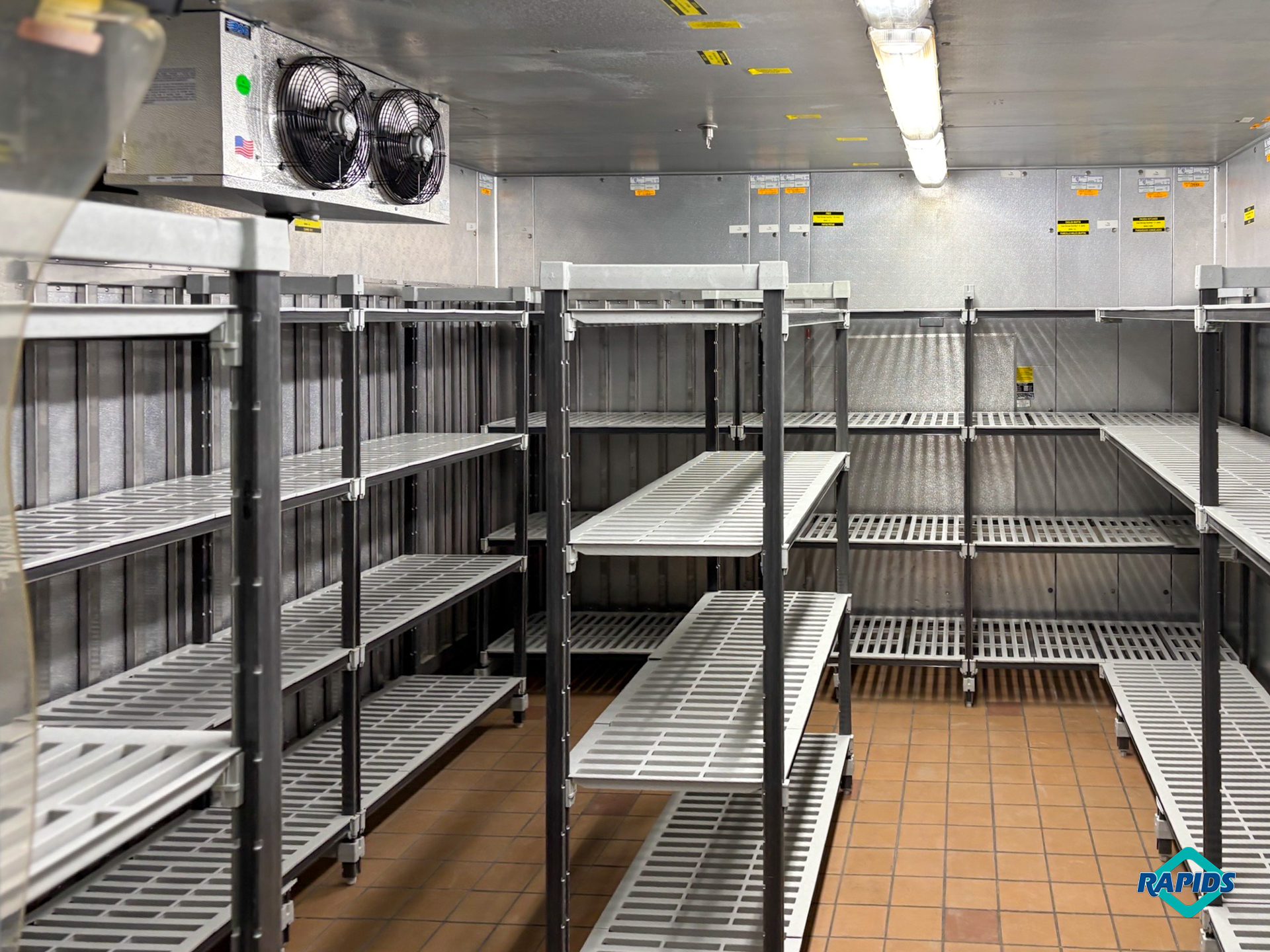
- How much shelving will you need? More shelving can help maximize a smaller footprint, but you still need enough floor space to work safely and efficiently.
A general rule of thumb: plan for 1–1.5 cubic feet of cooler space per meal served during your peak period — but always verify this against your specific menu and product volume.
Account for Your Space
Even if you know the storage capacity you need, your physical space may dictate what you can actually install. Consider:
- Available floor area — Walk-ins need a minimum of 2 inches of clearance from surrounding walls or exterior walls to allow for proper airflow and installation.
- Ceiling height and ventilation — The ceiling above the unit matters, especially for self-contained refrigeration systems. The cooling unit needs adequate air space to prevent heat buildup. If ventilation is limited, additional ventilation may be required.
- Access to kitchen work areas — Your walk-in should be positioned so staff can move in and out efficiently without creating traffic bottlenecks during peak service.
Self-Contained vs. Remote Refrigeration
Once you know your size, you'll need to decide on your refrigeration setup:
Self-Contained units mount the compressor on top or on the side of the walk-in. They're simpler to install and work well when you have adequate ceiling clearance and airflow around the unit.
Remote Refrigeration places the compressor at a distance from the walk-in — sometimes outside or in a mechanical room. This keeps noise and heat out of the kitchen, which is a real advantage in tight spaces. Just keep in mind that the farther the distance, the more efficiency you lose.
Pre-Fabricated or Built-In?
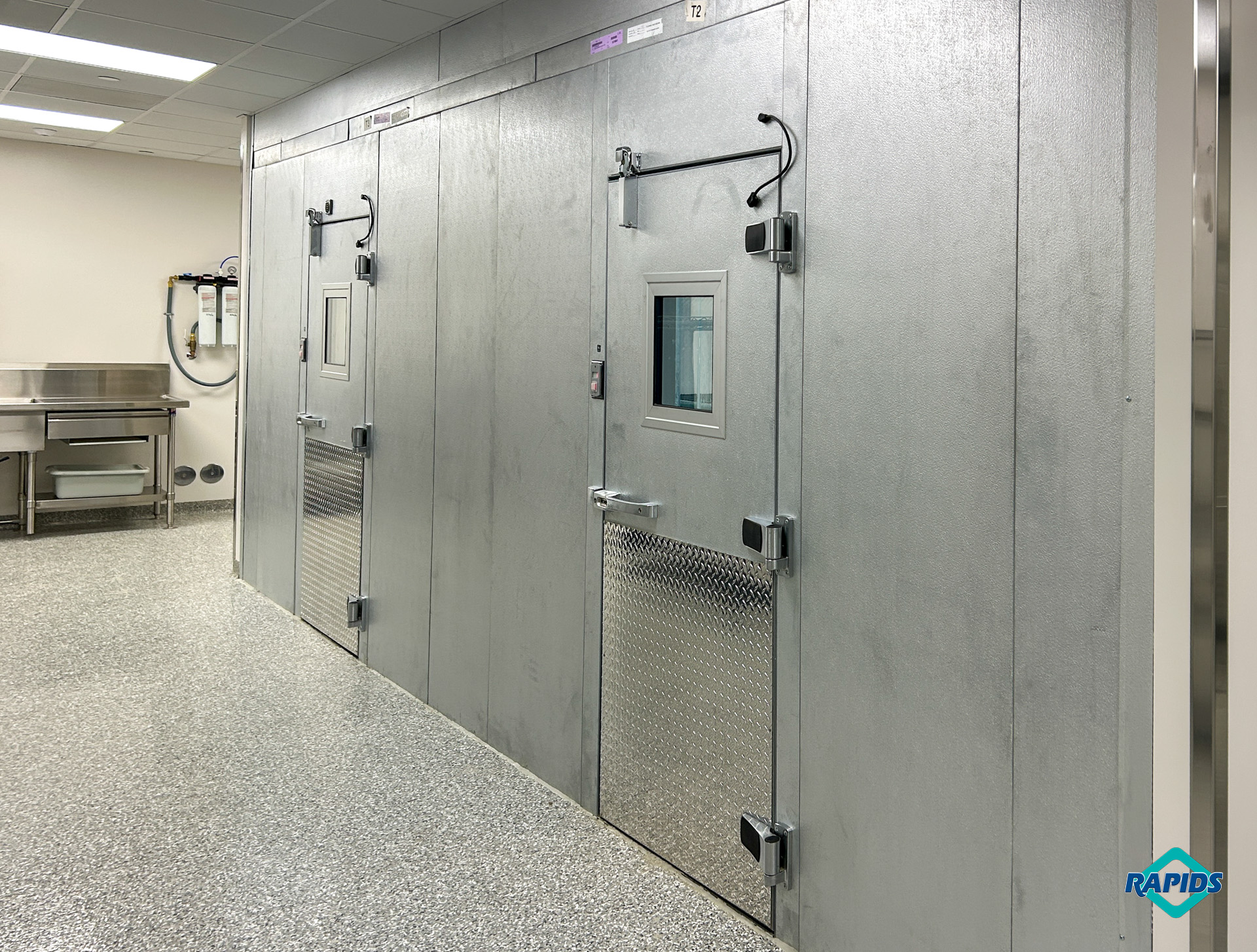
For most foodservice operations, pre-fabricated walk-ins are the practical choice. They're built from modular 4-inch insulated panels, come in a wide range of heights, widths, and lengths, and can be assembled on-site. They're also easier to relocate or reconfigure if your needs change.
Built-in walk-ins are custom-constructed for a specific space. They're typically more expensive and harder to modify later, but they let you maximize every inch of an unusual layout.
Quick Sizing Checklist
Before finalizing your walk-in cooler purchase, run through this checklist:
- Estimated storage volume needed (based on delivery frequency and menu)
- Available floor space and ceiling height
- 2" minimum clearance from surrounding walls confirmed
- Refrigeration type selected (self-contained or remote)
- Ventilation plan in place for the compressor
- Shelving plan established
- Access and traffic flow considered
Need Help Sizing Your Walk-In?
The right walk-in cooler is one of the most important investments in your kitchen. If you're not sure where to start, our team at Rapids Wholesale is here to help. Browse our walk-in cooler selection or reach out to us directly — we'll help you find the right unit for your space and operation.