What Does ADA Compliant Mean for Restaurant Equipment?
- Jul 17, 2026

DA stands for the Americans with Disabilities Act, a federal civil rights law passed in 1990 that requires businesses open to the public — including restaurants, cafés, bars, and cafeterias — to be accessible to people with disabilities.
When a sink, counter, faucet, or piece of signage is described as "ADA compliant," it means that item meets specific measurements and design standards laid out in the 2010 ADA Standards for Accessible Design, so a person using a wheelchair or with limited mobility can use it comfortably and safely.
For foodservice operators, ADA compliance isn't optional in guest-facing areas — it's inspected, and getting it wrong can mean costly rework or fines.
What Does ADA Compliance Involve?
ADA compliance covers a wide range of dimensions and design details, but for foodservice equipment, a few core requirements show up again and again:
- ✅ Height limits: Sinks and counters in accessible areas must have a rim or surface no higher than 34 inches from the floor.
- ✅ Knee and toe clearance: There must be open space underneath — at least 27" high, 30" wide, and 19" deep — so a seated user can pull in close.
- ✅ One-hand operation: Faucets, dispensers, and controls must be usable with one hand, without tight grasping, pinching, or twisting.
- ✅ Protected plumbing: Any exposed pipes under a sink must be insulated so they can't burn or scrape a seated user's legs.
- ✅ Clear floor space: At least 30" x 48" of open floor in front of a fixture, for a forward approach.
Products built to these specs are typically labeled "ADA compliant" in the description, similar to how NSF-listed items carry that certification.
ADA vs. Non-ADA: A Real-World Example
Two hand sinks can look nearly identical on a spec sheet, but only one may be usable by every guest or employee. Both sinks work — but only one meets the legal standard for accessible areas like handwashing stations, break rooms, and restrooms.
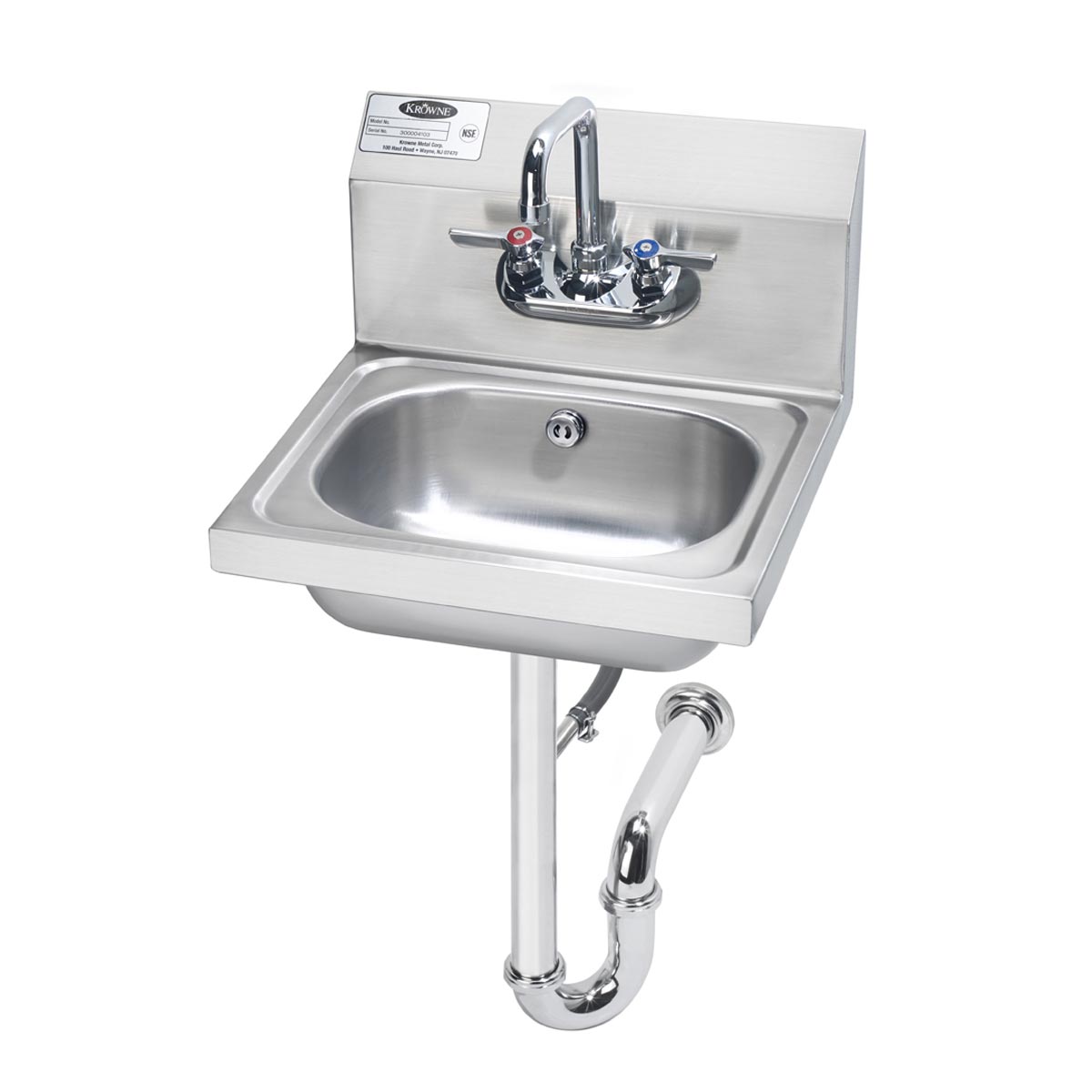
A standard wall-mount hand sink with a two-handle faucet and a rim height of 36" looks and functions fine for most staff — but it fails ADA on two counts: the faucet requires two hands and a twisting motion, and the rim sits above the 34" maximum.
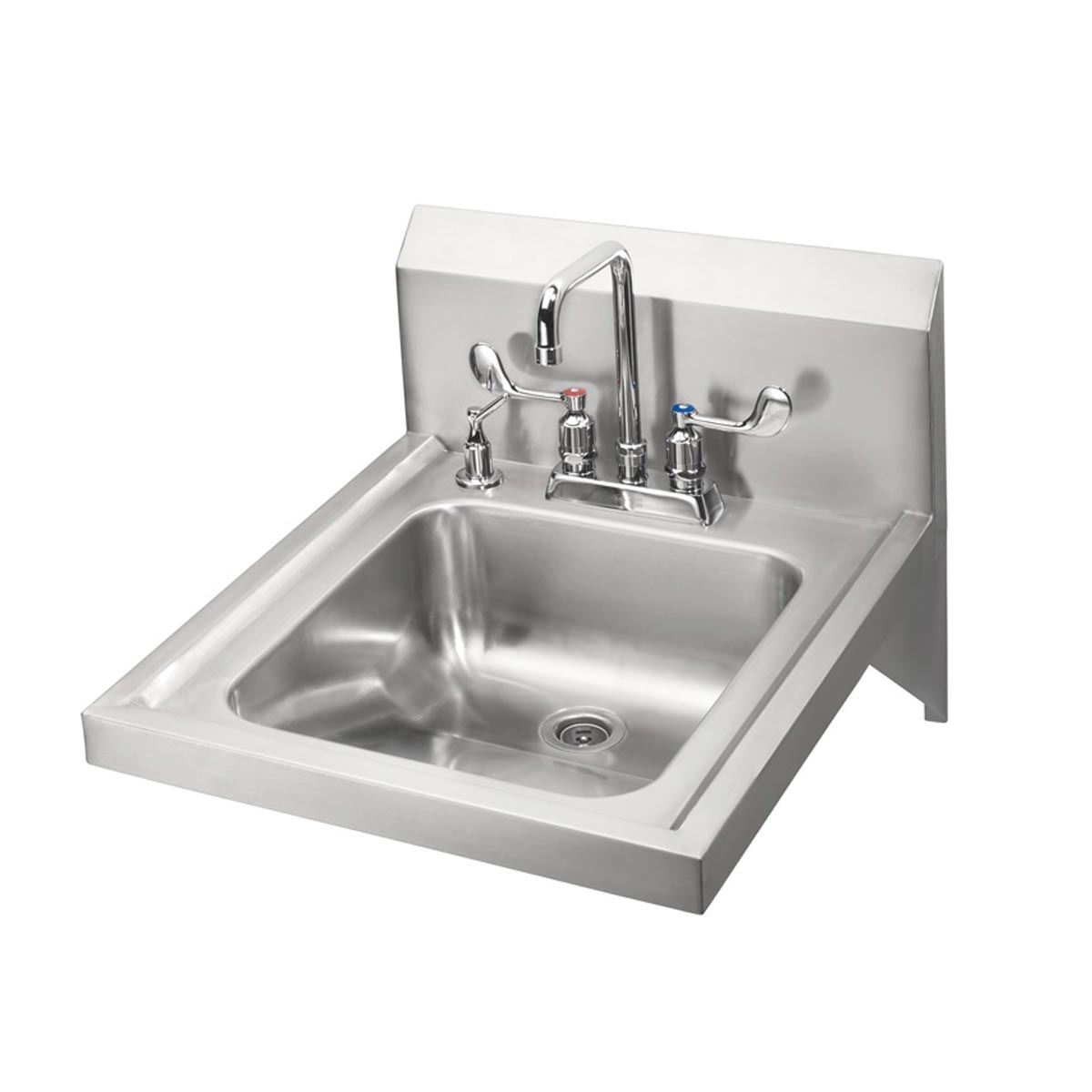
An ADA-compliant hand sink, by contrast, is mounted at 34" or lower, has a single-lever or hands-free faucet, and has insulated supply lines underneath. It's built specifically so a person seated in a wheelchair can roll up, get their knees under the basin, and operate the faucet with one hand.
Where ADA Compliance Applies in a Commercial Kitchen
A helpful thing to know: not every square foot of a commercial kitchen has to be ADA compliant. Under the ADA Standards, the cooking line and internal prep areas are generally treated as an "employee work area," which only requires an accessible path in and out.
However, these areas are NOT exempt and must be fully ADA compliant:
- Handwashing sinks (staff and public-facing)
- Break rooms and restrooms
- Any counter or sink the public interacts with directly