How to Keep Food Safe at Outdoor Catering Events
- May 28, 2026

Outdoor food service comes with unique challenges — heat, humidity, and distance from a commercial kitchen all create opportunities for foodborne illness. With the right practices and equipment, you can serve safely every time.
Why Outdoor Food Safety Is Different
Inside a restaurant kitchen, you have refrigeration at arm's reach and a controlled environment. Outside, you're battling ambient temperatures that can push past 90°F in June, unreliable power, and food that may have traveled an hour before it ever hits a serving line. Most foodborne illness at outdoor events is preventable - it just takes a little planning.
The Temperature Danger Zone
The USDA defines the temperature danger zone as 40°F to 140°F. Bacteria multiply rapidly within this range, and at outdoor summer temperatures, food can move through the safe zone faster than you'd expect.
The rule is simple: cold food must stay at or below 40°F, hot food must stay at or above 140°F. If food has been in the danger zone for more than 2 hours - or just 1 hour when it's over 90°F outside - discard it.
| Food Type | Min Cook Temp | Cold Holding | Hot Holding |
| Poultry | 165°F | 40°F or below | 140°F or above |
| Ground beef/pork | 155°F | 40°F or below | 140°F or above |
| Whole beef, pork, fish | 145°F | 40°F or below | 140°F or above |
| Cooked vegetables | 135°F | 40°F or below | 140°F or above |
Cold Holding: Ice and Transport
Pre-chill everything before it goes in a cooler. Ice maintains cold temperatures — it doesn't create them. Pack warm food into a cooler and you'll drain your ice without chilling the food.
Use enough ice — a 2:1 ice-to-food ratio by weight is the standard. Block ice lasts longer than cubed. Keep cooler lids closed as much as possible, and drain standing meltwater regularly to avoid contaminating food packaging.
Check temperatures at least hourly with a probe thermometer during service.
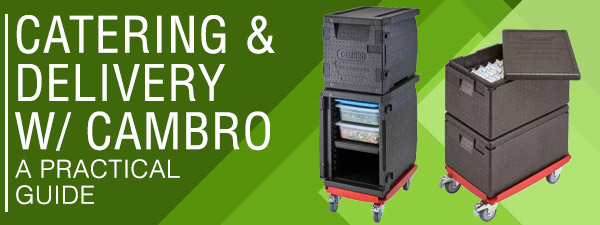
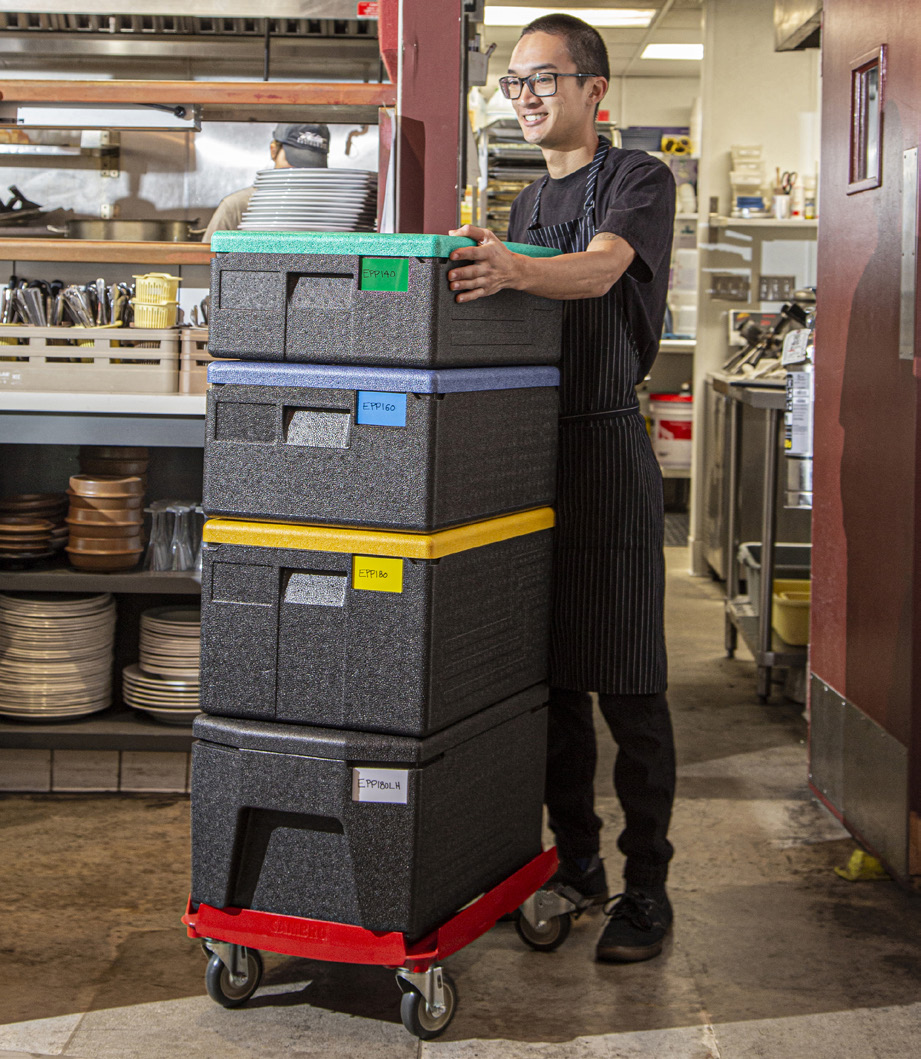
For professional-scale cold transport, insulated food pan carriers are far more reliable than coolers. Units from Cambro and Carlisle maintain safe temperatures for hours without power.
Rapids Wholesale carries insulated food carriers and pan transport containers built for exactly this — maintaining cold or hot holding temps from kitchen to service line.
Hot Holding: Chafing Dishes and Fuel
Hot food must stay at 140°F or above throughout service. A few things make a big difference outdoors:
Cook to safe temps first. Hot holding isn't cooking — make sure everything hits proper internal temperatures before it goes into a chafer.
Choose the right fuel. Gel fuel burns hotter and is good for rapid heating; wick-style canned fuel burns longer and suits sustained holding. Always bring more fuel than you think you need.
Use water pans correctly. The water pan distributes heat evenly and prevents scorching. If the water cools down, so does your food.
Set up out of the wind. Wind kills chafing dish efficiency fast — use lids between rushes and position your setup with a windbreak.
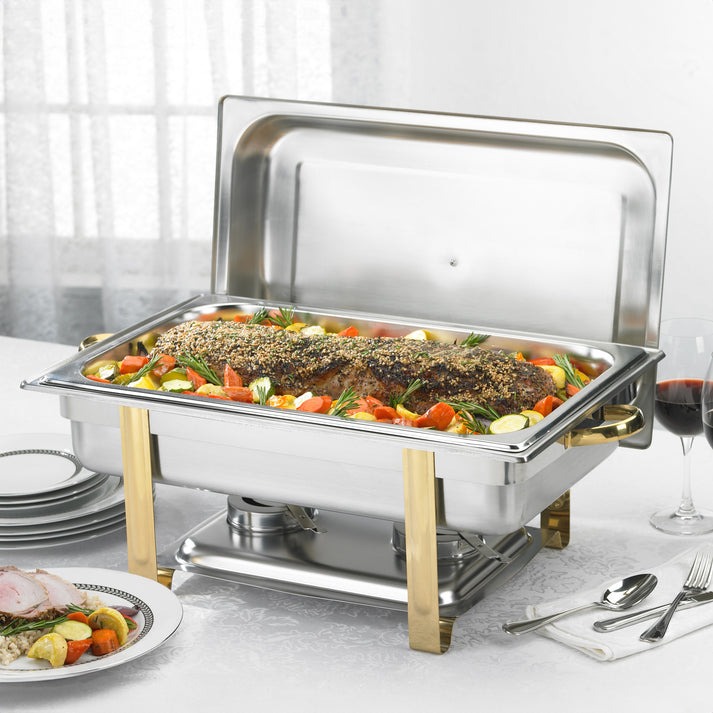
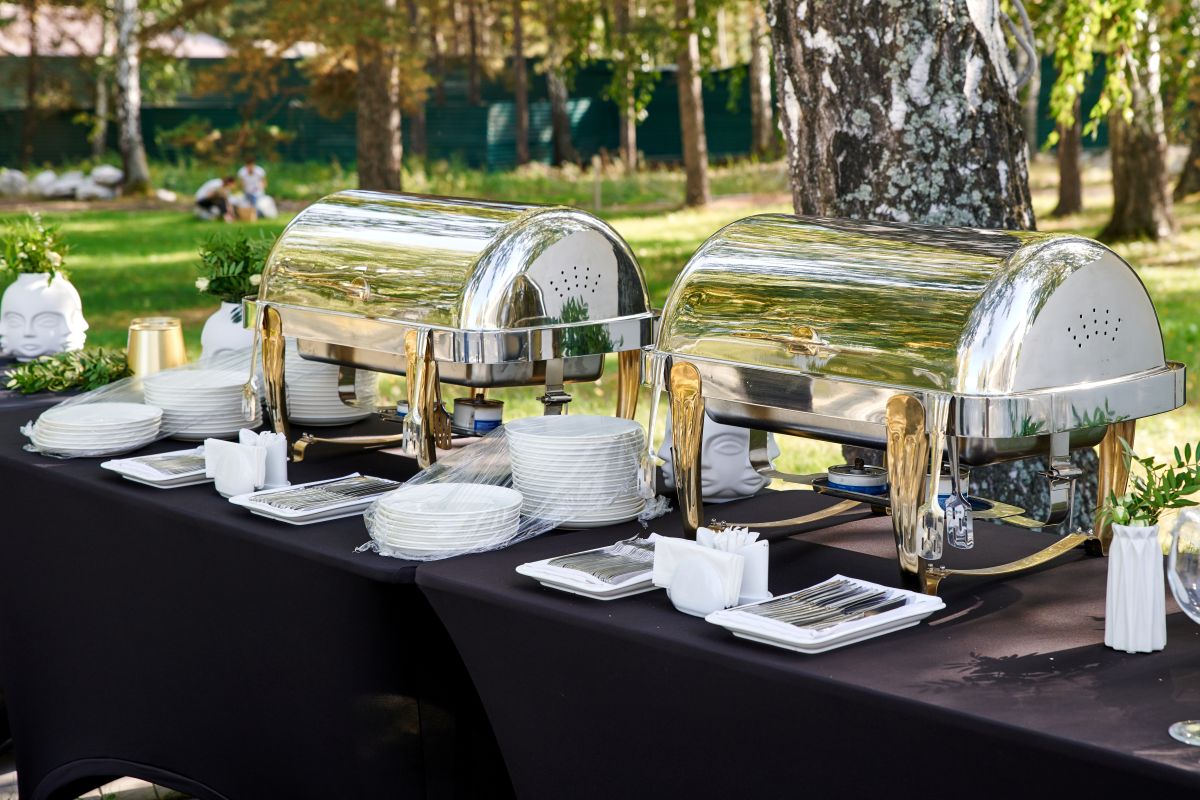
Rapids carries a full range of chafing dishes — roll-top, full size, half size, and round — plus gel and canned chafing fuel.
Electric induction warmers are worth considering if you have reliable power on-site.
Transporting Food Safely
- Hot food should be above 140°F when loaded; cold food below 40°F. Check before you pack.
- Use insulated carriers — not foil wrap — for professional transport.
- Log departure time and temperature so you can calculate your safe service window on arrival.
- Keep raw proteins physically separated from ready-to-eat items.
- Plan to serve within 1–2 hours of leaving your kitchen when possible.
Hand Hygiene in the Field
Many outdoor setups lack proper handwashing facilities — this is one of the most overlooked risks. At permitted events, a portable handwashing station is often required. Otherwise: food-safe sanitizer gel, single-use gloves with disciplined change-out, and strict separation between handling raw proteins and ready-to-eat items.
Quick Equipment Checklist
Before your next outdoor event, make sure you have:
- Probe thermometer (with extra batteries)
- Insulated hot and cold food carriers
- Chafing dishes and sufficient fuel
- Ice (2:1 ratio minimum) with proper drainage
- Separate containers for raw vs. ready-to-eat
- Handwashing station or sanitizer + gloves
- Marker and tape for time-labeling pans
Food safety at outdoor events isn't complicated — it's mostly about having the right equipment and building consistent habits. If you're outfitting your catering operation, Rapids Wholesale has been supplying foodservice professionals since 1936 and carries everything on that checklist.
Questions about specific equipment for your setup? The Rapids team is known for practical, experience-based advice — reach out to us today.