Organized, Fresh, and Safe: Food Storage That Works for You
- Oct 21, 2025

Safe and efficient food storage is at the heart of every successful kitchen operation. From preserving freshness to maintaining food safety standards, how you store ingredients affects your workflow, costs, and the quality of every plate that leaves your kitchen.
At Rapids Wholesale, we understand that restaurants, cafeterias, and commercial kitchens need storage systems that can handle heavy use while keeping food secure and easy to access. By following a few core best practices and choosing the right equipment, you can reduce waste, save time, and ensure that every ingredient is stored safely.
1. Control Temperatures to Keep Food Fresh
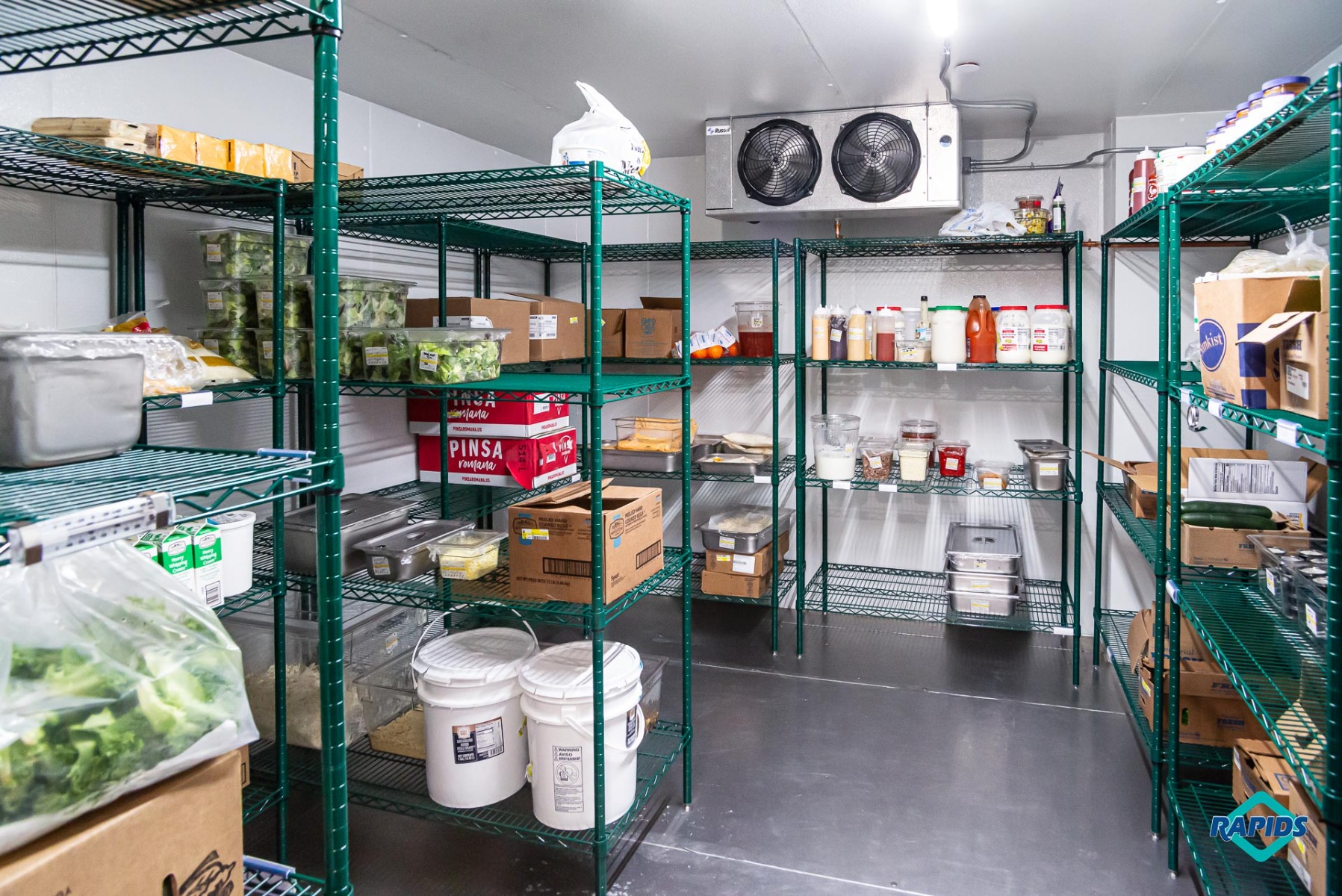
Temperature control is the first and most important step in maintaining food safety. Perishable ingredients such as meat, poultry, seafood, dairy, and certain produce must be kept cold enough to prevent bacterial growth.
- Cold storage: Keep refrigerators set at 40°F (4°C) or below to maintain freshness and slow spoilage.
- Freezer storage: Store frozen items at 0°F (-18°C) or lower to maintain quality and texture.
- Hot holding: Prepared foods being kept warm for service should stay above 140°F (60°C) to avoid bacterial danger zones.
It’s good practice to check temperatures at least twice a day and record them. Use properly calibrated thermometers to verify accuracy. A reliable commercial refrigeration unit not only keeps food safe but also helps maintain consistency during busy shifts. Rapids Wholesale carries a full range of commercial refrigerators, freezers, and thermometers to help operators maintain tight temperature control from delivery to service.
2. Separate Raw and Ready-to-Eat Foods
Cross-contamination is one of the most common causes of foodborne illness, but it’s also one of the easiest issues to prevent. Always store raw meats, poultry, and seafood separately from ready-to-eat foods like salads, baked goods, or cooked dishes.
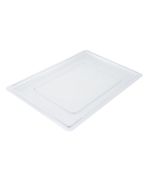
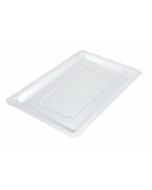
Place raw proteins on lower shelves or in designated containers to prevent juices from dripping onto other items. In larger kitchens, using color-coded bins or lids can make it easier for staff to identify storage areas for different food types at a glance.
Keeping a clear separation also applies to prep areas and utensils - assigning specific cutting boards or knives for raw foods helps maintain consistency and reduce risk throughout the food preparation process.
3. Use Proper Containers and Packaging
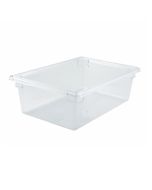
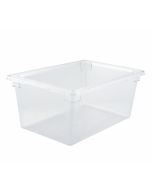
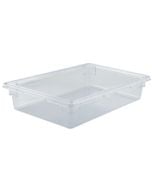
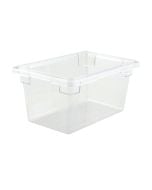
Choosing the right storage containers plays a major role in both safety and efficiency. Containers that seal tightly help maintain moisture levels and reduce exposure to air, which slows spoilage. Clear containers make it easy to identify contents and check freshness without constantly opening lids, and labeling each item with a date and description simplifies inventory management.
Cambro FreshPro CamRound Containers
Cambro’s FreshPro CamRound Containers are an excellent example of how thoughtful design can improve everyday kitchen efficiency.
- Easy-carry handles and a smooth interior make them comfortable to transport and simple to stir or mix in.
- The round base design allows easier scraping and reduces food waste when transferring or portioning ingredients.
- Curved corners enable precise four-sided pouring and effortless cleaning.
- The square lid fits tightly to help maximize shelf space in refrigerators and dry storage areas.
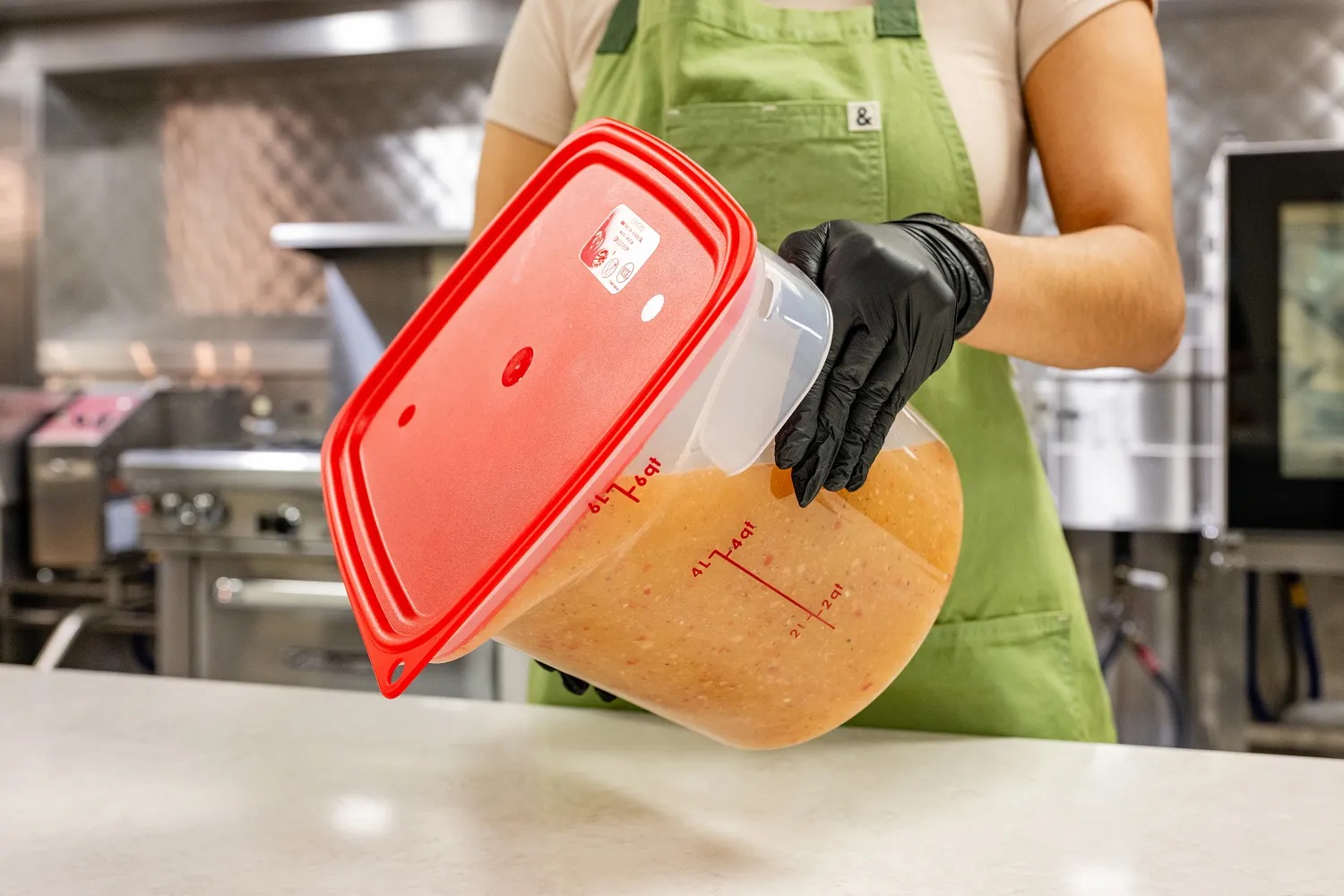
These containers are built to withstand heavy commercial use and make an ideal upgrade for kitchens looking to streamline prep and storage without sacrificing food safety.
4. Practice FIFO (First In, First Out)
Implementing the First In, First Out (FIFO) method is one of the easiest ways to reduce waste and keep your food inventory organized. The idea is simple: always use the oldest products first before moving on to newer stock.
Label and date every item before placing it in storage. When new supplies arrive, rotate them so the older items remain at the front and are used first. This system helps prevent forgotten or expired products from hiding at the back of shelves, saving both money and time.
For larger operations, consider investing in shelving or storage racks that make rotation easier - open wire shelving, for example, allows clear visibility of stock levels and helps maintain proper air circulation around stored items.
5. Maintain Clean, Organized Storage Areas
Cleanliness is essential for both safety and efficiency. Schedule regular cleaning and sanitizing of all storage areas, including shelving, floors, and container surfaces. Check for signs of spills or leaks daily, and immediately clean anything that could attract pests or lead to mold growth.
Dry storage areas should be kept cool, dry, and well-ventilated. Keep all goods at least six inches off the floor to meet health code requirements and prevent contact with dirt or pests. In walk-in coolers and freezers, avoid overcrowding shelves so cold air can circulate freely.
Organized storage not only promotes better hygiene but also improves workflow - your staff will find items faster, reduce prep time, and minimize unnecessary food handling.
6. Choose Equipment That Supports Efficiency
Every kitchen setup is different, but investing in durable, easy-to-clean equipment makes safe food storage easier to maintain and daily operations more efficient. From shelving and refrigeration to reliable storage containers, the right tools help keep your products protected, reduce waste, and ensure smooth workflow throughout the kitchen.
At Rapids Wholesale, we offer commercial kitchen solutions designed to support safety, organization, and productivity. Whether you’re setting up a new workspace or upgrading existing equipment, you’ll find everything you need to keep your kitchen running efficiently and maintain the highest food quality standards. Explore our complete selection of commercial food storage containers, shelving, and refrigeration systems to discover how the right equipment can make all the difference in your operation.