Hobart Mixers: Choosing Between the 20-Qt, 30-Qt, and 60-Qt
- Aug 7, 2026

Hobart makes several mixer sizes, but three come up most often in commercial kitchens: the 20 qt for lighter daily prep, the 30 qt for steady mid-volume work, and the 60 qt for high-output kitchens. The right one depends less on your busiest rush and more on what you're mixing on a typical day. Here's a closer look at how they compare.
Hobart 20-Qt Mixer
The 20-qt is Hobart's countertop workhorse. It runs on a 1/2 HP motor with a gear-driven transmission, three fixed speeds, and a #12 attachment hub that opens it up to grinder, slicer, and other Hobart attachments.
- Best for: cafes, small bakeries, coffee shops, and restaurants mixing in smaller batches
- Typical output: around 8-9 lbs of pizza dough per batch, or comparable volumes of batter and whipped cream
- Why operators choose it: compact countertop footprint, lower upfront cost, and enough power for daily prep without the space commitment of a floor mixer
If you're mixing small, frequent batches rather than one large batch per day, the 20-qt usually keeps up fine.
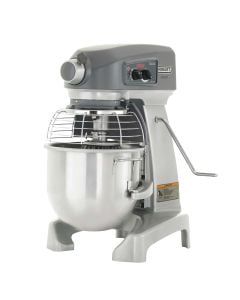
Hobart 30-Qt Mixer
The 30-qt steps up to a 3/4 HP motor and moves from countertop to floor mixer, with three fixed speeds plus a stir speed for folding in delicate ingredients without overworking them.
- Best for: bakeries and restaurants with steady, moderate-volume production — the size most operators describe as their "workhorse" once they've outgrown countertop mixing
- Typical output: noticeably more dough and batter per batch than the 20-qt without the size and cost jump of a 60-qt
- Why operators choose it: it's the sweet spot between capacity and manageability — the bowl is still practical to lift, wash, and maneuver day to day
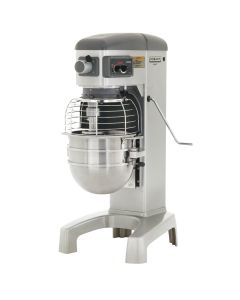
Hobart 60-Qt Mixer
The 60-qt is built for volume. It carries a 2.7 HP motor, the same #12 hub for attachments, and can be paired down with smaller secondary bowls when you don't need full capacity for every batch.
- Best for: high-volume bakeries, commissaries, institutional kitchens, and pizza operations running large batches daily
- Typical output: significantly higher batch volume, cutting the number of mixing cycles needed per shift
- Why operators choose it: fewer batches means less labor time spent babysitting the mixer, which matters most once volume gets high enough to justify the equipment footprint
Quick Comparison
| Size | Motor | Best For |
| 10-Qt | 3/4 HP | Small cafes, tight kitchens, light daily prep |
| 20-Qt | 1/2 HP | Cafes, small bakeries, light daily prep |
| 30-Qt | 3/4 HP | Steady moderate-volume production |
| 40-Qt | 1.5 HP | High-volume bakeries, commissaries, larger batch production |
| 60-Qt | 2.7 HP | Very high-volume commissaries and institutional kitchens (special order) |
One Rule of Thumb Before You Buy
Don't size a mixer to your busiest day — size it to your average day, with enough headroom that you're not maxing out the bowl every batch. Overfilling a mixer strains the motor and gears over time, and if you're consistently running the bowl at full capacity, that's usually a sign it's time to size up rather than push the equipment harder.
Not sure which size fits your kitchen's volume? Reach out to our team — we can walk through your batch sizes and point you to the right model.