Stamped Steel vs. Cast Iron Table Bases
- Sep 23, 2025
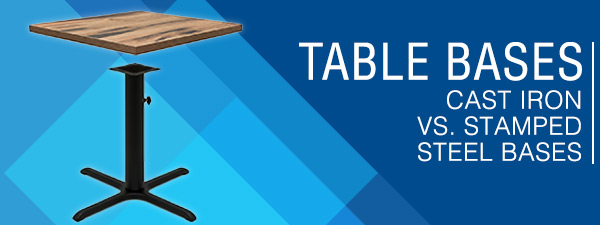
When planning a restaurant dining area, furniture decisions go beyond style. The durability and performance of your tables are just as important as the look of the tabletops. One of the most overlooked choices is the table base. While not as visible as the surface, the base determines how stable, reliable, and easy-to-maintain a table will be over time.
Two common options in the foodservice industry are cast iron and stamped steel table bases. Both materials have been used for years, but they differ greatly in how they’re made, how they perform, and how they stand up to the demands of a busy operation.
Cast Iron Bases: Common but Limited
Cast iron is often chosen because it’s inexpensive to produce, which keeps the purchase price low. However, that lower cost comes with trade-offs that can lead to long-term maintenance issues:
- Brittle by nature – Cast iron is prone to cracking or breaking under sudden impact or bending stress.
- Weak tensile strength – It performs poorly when stretched or pulled, limiting its durability in certain applications.
- Difficult to weld – The high carbon content of cast iron makes welding unreliable. Because of this, manufacturers often rely on assembly methods that are less robust.
- Issues with glide tabs – Since tabs are cast directly into the mold, threads can come out blocked or burred, making it difficult or impossible to install leveling glides.
- Complex assembly – A typical cast iron base uses a long rod and multiple nuts to hold the pieces together. This process requires careful adjustments to set the correct height for the tabletop. If the rod is overtightened, it can stretch or twist, leaving the base permanently loose.

Stamped Steel Bases: Precision and Durability
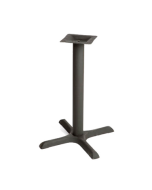
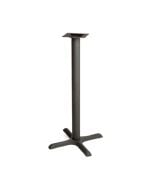
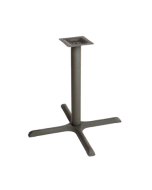
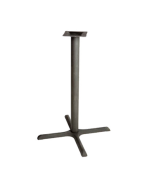
Stamped steel uses a different process, where sheets of steel are pressed into shape with tight tolerances. This results in parts that are more consistent, stronger, and easier to work with. Oak Street has taken this a step further by designing their stamped steel bases with added reinforcements:

- Consistency and strength – Stamped steel parts are produced to precise standards, ensuring reliability and uniformity. Unlike cast iron, they won’t fracture under heavier weights.
- Welded design for stability – Oak Street welds the column to the top plate and anchor plate, creating a more durable base structure.
- Larger support “spiders” – Oak Street’s spiders (the cross-support pieces under the tabletop) are bigger than most competitors’, providing additional stability.
- Anchor plate and short-bolt system – Instead of a long rod, a short bolt connects the foot to the welded anchor plate, secured with flat and lock washers. This design helps prevent loosening over time.
- Improved glide tabs – Stamped steel allows for welded glide tabs with hollow backs, something cast iron can’t offer. This drastically reduces problems with leveling glides.
- Simplified assembly – With only two main pieces to connect, stamped steel bases are much easier and faster to assemble than their cast iron counterparts.
Choosing the Right Base for Your Space
When deciding between cast iron and stamped steel, consider the balance between cost and long-term performance. Cast iron bases may be less expensive initially, but stamped steel bases provide superior strength, easier assembly, and fewer headaches down the road.
For restaurants, cafés, and bars where furniture is in constant use, stamped steel bases often deliver the best overall value. Operators can save time during setup and avoid many of the issues that come with cast iron.

At Rapids Wholesale, we offer a selection of Oak Street furniture, including their line of stamped steel table bases. Oak Street’s designs are built with foodservice operators in mind, combining durability with user-friendly assembly.
Whether you’re setting up a new dining area or upgrading your current tables, understanding the difference between cast iron and stamped steel bases can help you make a more informed decision - one that will support your business for years to come.