Rethermalizer vs. Food Warmer: What’s the Difference?
- Mar 19, 2026
In many commercial kitchens, reheating and holding food are part of the same daily workflow - but they require very different equipment. Understanding the difference between a rethermalizer and a food warmer can help improve food safety, consistency, and overall efficiency.
This guide breaks down how each piece of equipment works and when to use it, along with a look at newer induction options designed to simplify the process.
What Does a Food Warmer Do?
A food warmer is designed to maintain temperature, not create it.
Once food has already been heated to a safe serving temperature, a warmer keeps it hot and ready for service. These units are commonly used on serving lines, buffets, or prep stations where food needs to stay consistent over time.
Best use cases
- Holding soups, sauces, and sides during service
- Keeping pre-heated foods above safe serving temperatures
- Maintaining consistency on a line or buffet
Because warmers are not built to raise temperature quickly, using them to heat cold food can lead to uneven results and potential food safety concerns.
What Is a Rethermalizer?
A rethermalizer is specifically designed to bring chilled food up to safe serving temperature quickly, then hold it there.
These units are built to move food through the food safety “danger zone” efficiently, making them ideal for operations that rely on pre-cooked or pre-chilled items.
Best use cases
- Reheating soups, chili, sauces, and prepared foods
- Finishing items that were cooked in advance
- Supporting cook-chill or commissary-style operations
In short, if food is coming out of cold storage, a rethermalizer is the right tool for the job.
Why the Difference Matters
Using the correct equipment isn’t just about performance - it directly impacts food quality and safety. For kitchens handling prepared foods in batches, this distinction becomes especially important during busy service periods.
Speed
Rethermalizers are built to heat quickly, while warmers are not
Food Safety
Proper reheating reduces time in unsafe temperature ranges
Consistency
Equipment designed for the task delivers more predictable results
Product Quality
Faster, controlled reheating helps preserve texture and flavor
Where Induction Rethermalizers Fit In
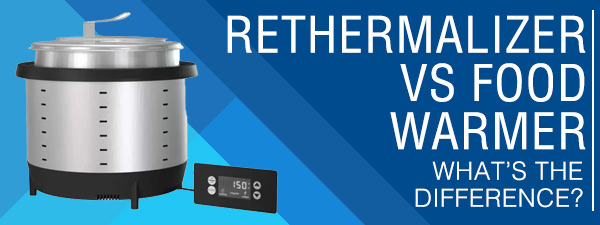
Recent advancements in induction technology have introduced a more precise and efficient way to rethermalize food. Units like the Vollrath Mirage® induction rethermalizers are designed to simplify the reheating process while improving consistency.
Instead of relying on traditional water-based systems, induction uses direct energy to heat the inset, allowing for faster response times and more controlled temperatures.
What’s New with Vollrath Induction Rethermalizers
- Compact formats suited for smaller batches like sauces, soups, and sides
- Preset programs that remove guesswork during operation
- Even heating through advanced induction coil design
- Waterless operation for easier maintenance
- Options for both countertop and drop-in configurations
These features make induction rethermalizers a practical solution for kitchens looking to streamline prep without adding complexity.

Rethermalizer or Warmer: Which Do You Need?
The choice comes down to how the food is being handled before service.
- If food is already hot and just needs to be held, a warmer is the right fit
- If food is coming from cold storage and needs to be reheated, a rethermalizer is essential
Many operations benefit from using both, especially in kitchens that prepare food in advance and finish it during service.
With the growing use of batch cooking, centralized prep, and cook-chill systems, rethermalizers are becoming more important in everyday operations. At the same time, warmers remain essential for maintaining consistency during service.
Newer induction-based equipment helps bridge the gap by offering precise control, compact footprints, and simplified operation - making it easier to match the right tool to the task without overcomplicating the workflow.