Electric & Gas Ranges
We offer the ideal gas or electric range for your restaurant, featuring a variety of commercial ranges and ovens to suit your kitchen's needs. Choose from models with four, six, or ten burners, or opt for a combination unit with burners, a griddle, and a broiler for added versatility. Explore our selection at Rapids Wholesale to find the perfect fit for your establishment.
-
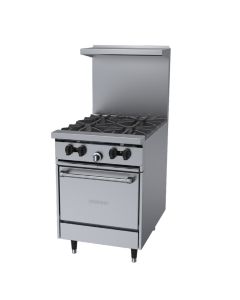
 Volition VR-4-24 4 Burner 24" Gas RangeSpecial Price $1,199.00 Regular Price $1,399.00


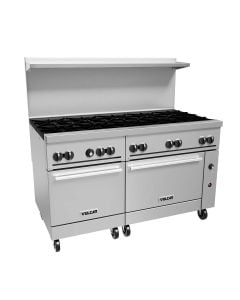
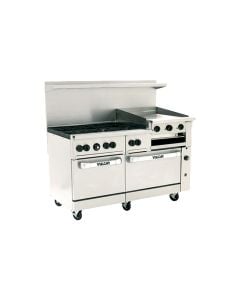
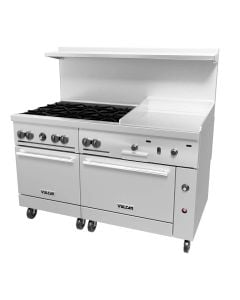
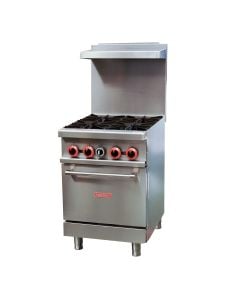
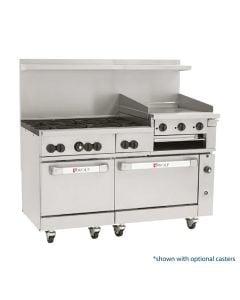
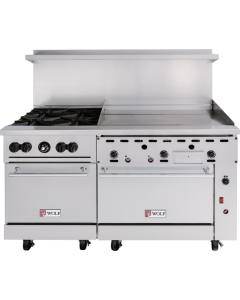
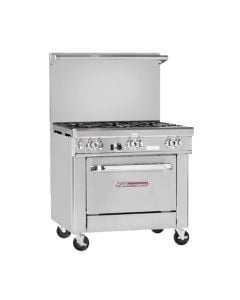
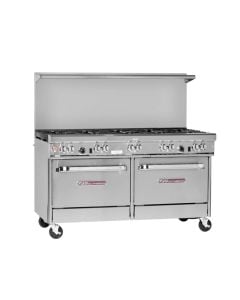
Commercial Ranges for Restaurants
A commercial gas range is a kitchen appliance that runs on natural gas, propane, butane, liquefied petroleum gas, etc. and is used to cook food.
A restaurant range is one of the main pieces of equipment that restaurants cannot do without. This is because commercial ranges for restaurants are used for a variety of purposes from cooking to grilling and broiling, important cooking jobs that any commercial kitchen would require. These days, commercial kitchen ranges come in many different sizes and configurations to suit any food-service business's demanding needs and are usually sturdier, more heavy-duty, and are more suited to frequent and regular use than to those used in the home.
The very first gas ranges were developed as early as the 1820s, but those are considered rare experiments. The very-first patented gas range was invented in 1826 in England. However, it wasn't until the 1880s that the first true commercial gas ranges came out.
Today, a modern commercial gas range usually utilizes two basic types of ignition sources: standing pilot and electric. A stove with a standing pilot has a small, continuously burning gas flame, also called a pilot flame, under the cooktop. The advantage of using a commercial gas range with this type of ignition source is that it is simple and is completely independent of any outside source of power. One minor disadvantage, however, is that the flames continue to consume fuel even though the stove is not in use. On the other hand, a gas kitchen range that utilizes an electric ignition uses electric sparks to ignite the surface burners. The sparks are initiated after turning the gas burner knob to a certain position or by pressing an ignition button. Once the burner lights, the knob is turned further to adjust the size of the flame.
Commercial Electric Ranges
A commercial electric range converts electrical energy into heat in order to cook and bake food. Electric stoves were invented in the late nineteenth century and immediately became popular alternatives for solid-fuel stoves that used wood or coal and which needed more labor to operate.
One advantage of using commercial electric ranges as opposed to their gas counterparts is, obviously, safety. Because an electric commercial range doesn't use gas, there is no risk of gas leaks. And leaking gas can be ignited by the pilot flame, with disastrous consequences.
Another advantage of electric commercial ranges is that they are they are more functional compared to gas ranges. For instance, you can add fans or top and bottom grillers to provide more functions for electric stoves, something that you cannot do with gas-powered stoves.
Electric & Gas Ranges
A commercial range is one of the most essential pieces of equipment in any professional kitchen. Designed for durability, high heat output, and continuous use, restaurant ranges support a wide range of cooking methods including sauteing, boiling, frying, baking, broiling, and grilling. Unlike residential stoves, commercial kitchen ranges are built to handle heavy cookware, high-volume production, and demanding daily service.
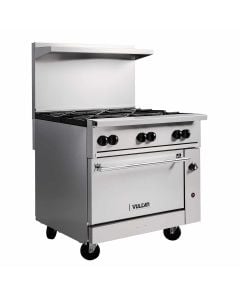
Most commercial gas and electric ranges include a built-in oven, allowing kitchens to cook on the cooktop while baking or roasting below. Many models also offer combination configurations, such as a range with burners on one side and a griddle or broiler on the other, making them ideal for operations that need versatility without adding extra equipment. These all-in-one designs help save floor space while increasing efficiency and menu flexibility.
Commercial ranges are available in multiple sizes and layouts, including four, six, and ten burner models, as well as wider units designed for high-output kitchens. Choosing the right restaurant range with oven ensures smooth workflow, consistent cooking results, and reliable performance during peak service hours.
Why Choose a Commercial Gas Range?
Gas ranges provide quick, responsive heat and are the standard in most busy commercial kitchens. They allow instant adjustments for sautéing, boiling, searing, or simmering, which is crucial during peak service hours.
Advantages of Gas Ranges:
- Rapid Heating: Burners reach cooking temperatures faster than electric ranges.
- Precise Control: Instantly adjust flame levels for quick cooking changes.
- High Heat Capacity: Suitable for heavy-duty cooking like stir-frying or searing.
- Built-In Ovens: Many gas ranges come with ovens for baking, roasting, or slow-cooking.
- Optional Griddles: Some units include griddles or broilers on the side for versatile menu preparation.
Gas ranges are perfect for restaurants, bars, or catering kitchens where speed, flexibility, and high-volume output are priorities.
Why Choose a Commercial Electric Range?
Commercial electric ranges are a safe and reliable choice for professional kitchens. They convert electricity into consistent heat, providing precise temperature control across cooktops and ovens. This makes them ideal for baking, slow-cooking, or delicate recipes that require uniform heat.
Advantages of Electric Ranges:
- Safety: No gas, so there’s no risk of leaks or combustion hazards.
- Consistent Heat: Ideal for baking or simmering where steady temperatures are required.
- Versatility: Many models include built-in ovens, broilers, or griddles for multi-function cooking.
- Ease of Use: Simple operation with electric knobs or digital controls.
- Efficiency in Space: Available in compact sizes for small kitchens without compromising performance.
Electric ranges are particularly suited for cafeterias, catering operations, or restaurants without gas lines. They are also ideal when precise control over temperature is a priority.
What Is a Stock Pot Range?
A stock pot range is a heavy-duty commercial range designed to accommodate large stock pots, steam kettles, or oversized cooking vessels. These ranges are essential for high-volume kitchens, such as restaurants, catering operations, or institutional kitchens, where soups, broths, sauces, and large-batch recipes are prepared daily.
Key Features of Stock Pot Ranges:
- High-Output Burners: Powerful burners designed to heat large volumes of liquid quickly.
- Durable Construction: Stainless-steel surfaces and reinforced burners for heavy-duty use.
- Open Burner Design: Spacious cooktop accommodates multiple stock pots or oversized containers.
- Integrated Oven Options: Some stock pot ranges come with built-in ovens for versatile cooking.
- Gas or Electric Models: Available in both fuel types depending on kitchen infrastructure.
Benefits of Using a Stock Pot Range:
- High-Volume Cooking: Ideal for soups, stocks, sauces, and stews in large batches.
- Even Heating: Reduces hot spots in large pots, ensuring consistent results.
- Durability: Designed to handle heavy pots without warping or damage.
- Efficiency: Frees up other burners for side dishes or smaller cooking tasks.
- Versatility: Can also be used for boiling pasta, blanching vegetables, or steaming.
Stock pot ranges are a must-have for restaurants, cafeterias, hotels, and banquet kitchens that need to prepare large quantities efficiently while maintaining consistency.