
Kitchen Exhaust Fans
Looking for commercial restaurant exhaust fans to improve the quality of indoor air in your food-service establishment? Here at Rapids Wholesale, you can choose from heavy-duty and weather-resistant commercial kitchen fans
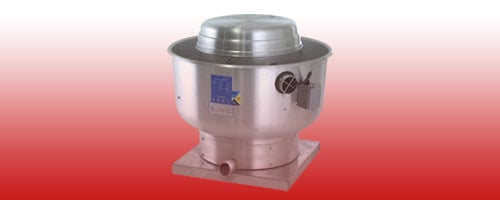
A well-designed kitchen exhaust system is essential for maintaining clean air and a comfortable working environment in any commercial kitchen. Exhaust fans remove heat, smoke, grease-laden vapors, and odors generated during cooking, helping to protect both your employees and your equipment.
Whether you operate a restaurant, cafeteria, or institutional kitchen, proper ventilation ensures compliance with local codes and improves the performance and lifespan of your kitchen equipment.
Need Help Finding the Right Exhaust Fan?
You may notice that this page doesn’t list specific exhaust fan models. That’s intentional. Commercial kitchen exhaust systems aren’t one-size-fits-all — selecting the wrong fan can cause poor ventilation, excess noise, overheating, or even fire and code issues.
Proper fan selection depends on many project-specific factors, including airflow requirements, hood type, duct length and configuration, roof or wall placement, makeup air considerations, and local building regulations. Because of these variables, exhaust fans are best specified through a consultation rather than direct online ordering.
Our team will review your kitchen layout, cooking equipment, and ventilation needs to recommend the correct fan type, capacity, and system configuration. We can also help coordinate compatibility with your hood system and ensure the solution meets safety standards and performance expectations while staying within your budget.
Contact our experts today for personalized assistance in designing the right exhaust solution for your kitchen.
Exhaust Fan Quote
What Are Commercial Kitchen Exhaust Fans?
A kitchen ventilation fan or kitchen wall exhaust fan is a mechanical ventilation device that helps draw out stale and impure air from your kitchen and bring in fresh air, thereby improving the quality of indoor air in your food-service establishment's cooking area. In most cases, a kitchen ventilation fan is usually ducted to the exteriors of your restaurant, through which bad indoor air can be effectively removed from your cooking and food-preparation areas. Needless to say, the best exhaust fan for kitchen is the one that can effectively get rid of both visible and invisible particles caused by cooking greasy foods and boiling.
Why are commercial kitchen fans beneficial for any commercial food-service establishment? For one, they are effective at ventilating your restaurant's cooking and food-preparation areas. Without proper ventilation, your kitchen or food-service staff might suffer because of the harmful contaminants and disease-causing pathogens that are produced inside a busy kitchen.
Pollutants, contaminants, and disease-causing pathogens can get released into the air through cooking, frying, and boiling. If not ventilated adequately using a commercial kitchen fan, these added pollutants, along with increased moisture levels, can greatly decrease the quality of indoor air in your kitchen, leading to various health problems for your food-service staff; split, warped, and rotted furniture due to excess humidity; cracked and peeling paint on the walls; and the formation of fungus, mold spores, and mildew, which could also lead to severe health problems.
It's a good idea to determine what size of fan you will require for your commercial kitchen before actually going out to choose and purchase your kitchen ventilation fan. Also, the exact location where you will install your commercial kitchen fan will have a big bearing on what size your kitchen wall exhaust fan will be.
Commercial Restaurant Exhaust Fans Available Here at Rapids Wholesale
Here at Rapids Wholesale, you can choose from commercial restaurant exhaust fans of heavy-duty construction.
All our restaurant kitchen exhaust fans are durable and weather-resistant. Restaurant exhaust fans also include a grease cup and waterfront disconnect switch. (It is good to note that listed static pressure, ductwork layout, and design can have a dramatic effect on static pressure and fan performance.)
Choose from several commercial restaurant exhaust fans (either direct drive or belt drive), depending on your budget range.
What Are Commercial Kitchen Exhaust Fans?
A commercial exhaust fan works by drawing contaminated, heated, and moisture-filled air from the cooking area and exhausting it outdoors through ductwork. In a typical setup, the fan is paired with a hood that captures airborne grease and smoke before it can escape into the rest of the kitchen.
There are several types of kitchen exhaust fans - rooftop, wall-mounted, and inline - each suited for different building layouts and ventilation needs. These fans typically include components such as:
- Motor and drive assembly (direct or belt-driven)
- Grease cup and drain to collect residue from cooking vapors
- Weatherproof housing to protect against outdoor conditions
- Disconnect switch for maintenance and safety compliance
An efficient exhaust fan helps prevent the buildup of grease and condensation in ductwork, reducing the risk of fire and ensuring your system performs reliably under demanding kitchen conditions.
Understanding Key Specifications
Because each commercial kitchen has unique airflow requirements, proper sizing and specification selection are critical. Some of the most important factors include:
- CFM (Cubic Feet per Minute) – This measures how much air the fan can move. The higher the CFM, the more powerful the airflow. Choosing the correct CFM ensures smoke and grease are removed efficiently without overloading your system.
- Static Pressure – This measures resistance in your duct system. Longer or more complex ductwork increases static pressure, requiring a stronger fan to maintain performance.
- Fan Speed (RPM) – Affects noise level, energy use, and overall airflow capacity.
- Motor Type and Horsepower – The motor’s power and design determine how efficiently the fan can run under continuous, high-temperature conditions.
- Mounting Configuration – Rooftop and wall-mount designs differ in airflow direction, weather exposure, and service access.
Because these specifications are interdependent, selecting the wrong combination can result in poor ventilation, excessive noise, or even code violations — which is why we recommend working directly with our ventilation experts.
Direct Drive vs. Belt Drive Fans
Both direct drive and belt drive fans have their advantages depending on your kitchen’s design and ventilation demands:
Direct Drive Fans
The motor is directly connected to the fan blades. This design offers fewer moving parts, less maintenance, and greater energy efficiency. Direct drive fans are often preferred for smaller kitchens or lower airflow requirements.
Belt Drive Fans
The motor drives the fan blades through a belt and pulley system, allowing for adjustable speeds and higher airflow capacities. Belt drive fans are commonly used in larger or high-volume kitchens that require more powerful ventilation.
Direct Drive Fans
The fan blades are directly attached to the motor shaft. This design minimizes mechanical parts, resulting in quieter operation, lower maintenance needs, and improved energy efficiency. Direct drive fans are ideal for smaller systems or lower static pressure applications where continuous operation is required.
Belt Drive Fans
These use a belt and pulley system to connect the motor and fan. Belt drive models are more flexible for adjusting fan speed and can handle higher airflow capacities, making them suitable for larger or high-heat kitchens. While they require periodic belt inspection and maintenance, their power and adjustability often make them the preferred choice for heavy-duty installations.